Tower Defence in Duck Lords: Tower Defense TD

Tower defence in Duck Lords is not a passive waiting game; it is an active tactical challenge where every placement and card choice shapes the battle. This guide breaks down the verified mechanics so you can defend your castle with confidence.

The game combines tower defence with roguelike deck-building, meaning each run offers new strategic possibilities. Understanding positioning and enemy behaviour is essential for success. This guide focuses on mechanics that are confirmed in the game, avoiding speculation.

Play on Google Play

Core Tower Defence Mechanics

Placing Your Defences

In Duck Lords, you place defensive units on the battlefield to stop enemy waves from reaching your castle. Placement is strategic: each unit has a role, and positioning them effectively can mean the difference between victory and defeat.

  • Units can be placed on designated tiles or areas.
  • Positioning affects coverage and synergy with other units.
  • The game encourages experimentation with different formations.
Targeting and Attack Patterns

Defensive units automatically target enemies within their range. Understanding attack patterns helps you anticipate how your defences will perform against different enemy types.

  • Units may have different targeting priorities, such as first, strongest, or closest.
  • Attack speed and range are key factors in defence planning.
  • Some units may have area-of-effect attacks.

Upgrading Your Defences

As you progress, you can upgrade your defensive units to increase their effectiveness. Upgrades may improve damage, range, or special abilities, allowing you to handle tougher enemy waves.

  • Upgrades likely require resources earned during battle.
  • Choosing which units to upgrade is a key strategic decision.
  • Upgrades may be temporary or permanent depending on the game mode.

Understanding Enemy Waves

Enemy waves in Duck Lords arrive in predetermined sequences, each with a mix of enemy types. Learning the patterns helps you anticipate threats and adjust your defences accordingly. Waves may increase in difficulty over time, and some waves may feature special enemies with unique abilities. The roguelike element means wave compositions can vary between runs.

Between waves, you have time to reposition units, play battle cards, and plan your strategy. Use this time wisely to counter the upcoming threats. You may be able to see a preview of the next wave, and repositioning units can be crucial for adapting to new enemy types. Battle cards can provide temporary buffs or debuffs.

Positioning Strategies

Choke Points and Coverage

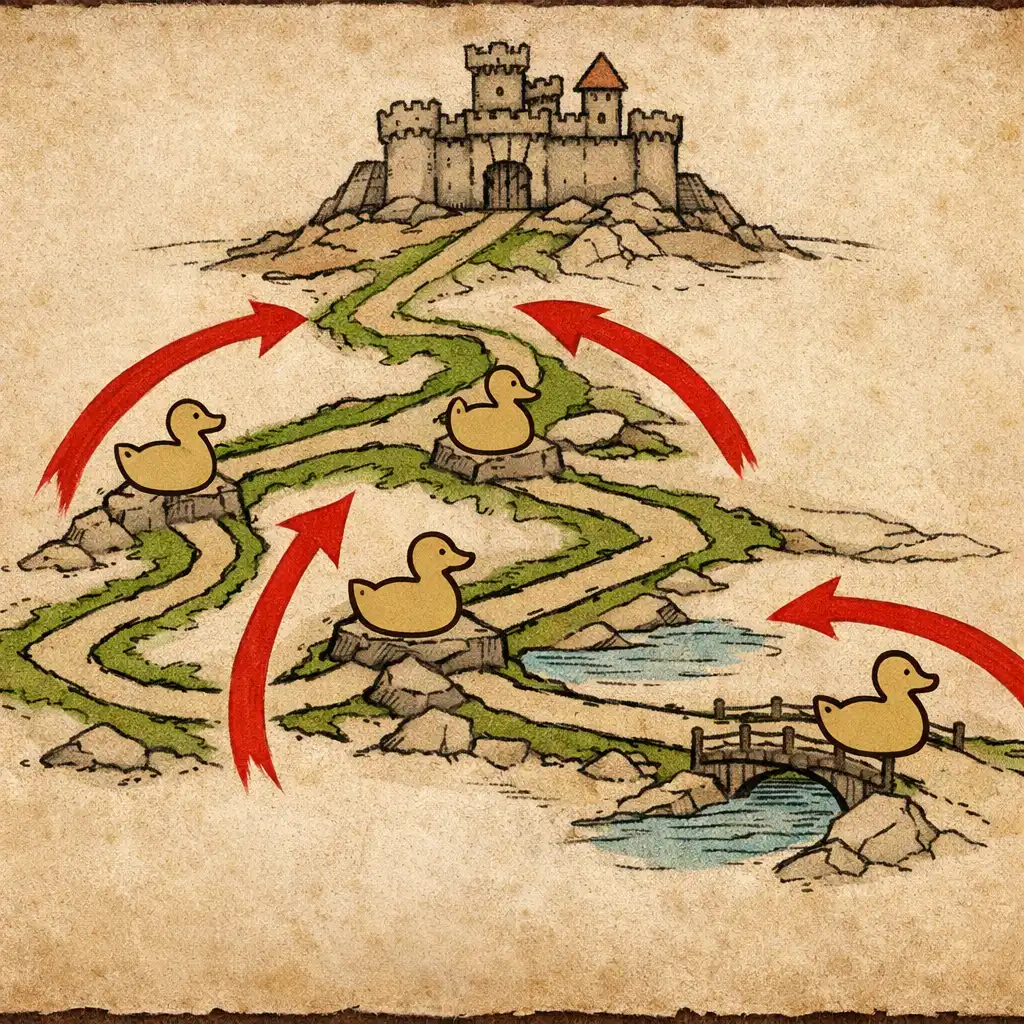
Identify choke points on the map where enemies must pass through. Placing your strongest units there maximizes their effectiveness. Ensure your defences cover all possible paths to the castle. Choke points are narrow passages that funnel enemies, and coverage means every enemy path is within range of at least one defensive unit. Balancing choke point defence with overall coverage is key.

Synergy with Battle Cards

Battle cards can enhance your positioning by providing buffs to units in certain areas or debuffs to enemies. Use cards that complement your defensive layout. Cards may affect units in a radius or along a path, and combining card effects with unit placement creates powerful synergies. Experiment with different card and unit combinations.

Hand-drawn tactical diagram showing a castle, winding enemy paths, and duck-shaped defensive units placed at choke points, with warning-red arrows indicating enemy movement.
Example defensive formation with units placed at choke points and along enemy paths.

Integrating Battle Cards

Battle cards in Duck Lords can provide offensive, defensive, or utility effects. Understanding the card types helps you build a deck that supports your tower defence strategy. Offensive cards may deal damage to enemies, defensive cards may buff your units or heal your castle, and utility cards may alter the battlefield or provide resources.

Your deck should complement your defensive units. For example, if you rely on area-of-effect units, include cards that group enemies together or increase area damage. Deck building is a roguelike element, so your deck evolves during a run. Look for cards that enhance your chosen strategy and avoid cards that conflict with your unit placement.

Roguelike Elements and Replayability

Randomised Challenges

Each run in Duck Lords presents different enemy waves, card choices, and possibly map variations. This randomness keeps the game fresh and requires adaptable strategies.

  • Enemy wave compositions may vary between runs.
  • Card rewards are likely randomised.
  • You must adapt your defence strategy on the fly.

Permanent Progression

While each run is unique, you may unlock permanent upgrades or new cards that carry over between runs. This progression gives a sense of long-term growth.

  • Permanent upgrades could improve starting resources or unit stats.
  • New cards may be added to your collection.
  • Progression encourages repeated play.

Strategic Depth

The combination of tower defence and roguelike deck-building creates deep strategic gameplay. Each decision, from unit placement to card selection, impacts your run.

  • There is no single optimal strategy; experimentation is rewarded.
  • Understanding synergies is key to success.
  • The game appeals to players who enjoy tactical planning.

Common Mistakes to Avoid

  • Overextending Your Defences

    Spreading your units too thin leaves gaps in your defence. Focus on key choke points and ensure full coverage of enemy paths. Prioritize quality over quantity in unit placement, use battle cards to fill temporary gaps, and regularly reassess your formation as waves progress.

  • Ignoring Card Synergies

    Battle cards are not optional extras; they are integral to your defence. Ignoring synergies between cards and units weakens your overall strategy. Read card descriptions carefully, plan your deck around your defensive units, and experiment with different combinations.

  • Neglecting Upgrades

    Failing to upgrade your units can leave you underpowered in later waves. Invest in upgrades that align with your strategy. Upgrade units that are central to your defence, balance upgrades with card plays, and don't hoard resources if an upgrade is needed.

Advanced Defence Tactics

Layered Defence

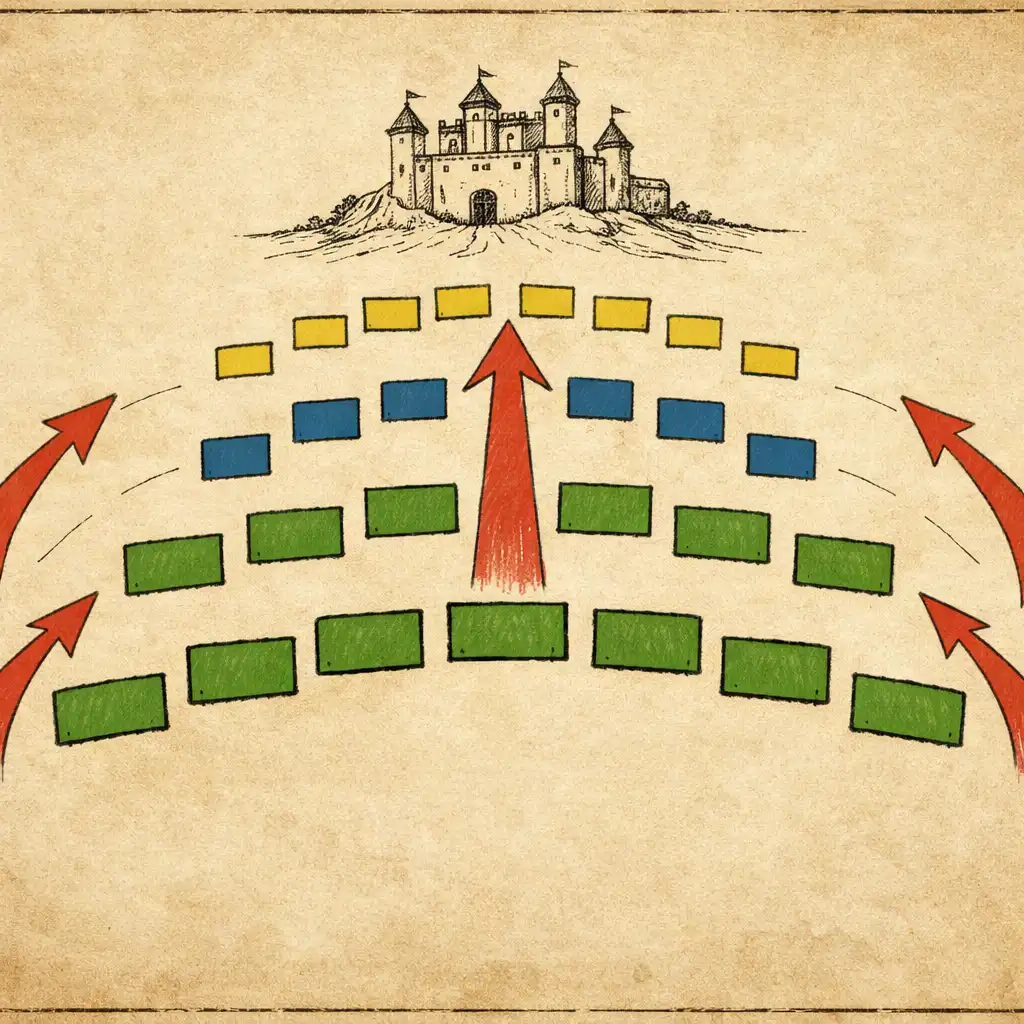
Create multiple layers of defence: front-line units to slow enemies, mid-line units for damage, and back-line units for support. This layered approach ensures no enemy slips through. Front-line units should have high health or slowing effects, mid-line units focus on damage output, and back-line units provide buffs or healing.

Adaptive Repositioning

Don't be afraid to reposition units mid-battle. If a wave is overwhelming one side, shift your defences to counter it. Flexibility is key. Repositioning may cost resources or have a cooldown, so anticipate enemy movements to reposition preemptively, and use battle cards to cover gaps during repositioning.

Hand-drawn tactical diagram showing a layered defence formation with front-line units in moss green, mid-line units in deep blue, and back-line units in duck-feather yellow, with warning-red arrows marking enemy paths.
Advanced layered defence with front, mid, and back lines.

Beginner's Quick Tips

Start with a Strong Core

Focus on building a solid core of defensive units before expanding. A few well-placed units are better than many poorly placed ones.

  • Place units at choke points first.
  • Upgrade core units before adding new ones.
  • Use battle cards to support your core.

Learn Enemy Patterns

Pay attention to enemy wave compositions and timings. Recognizing patterns helps you prepare and adapt.

  • Note which enemies appear in each wave.
  • Adjust your defences based on enemy types.
  • Use the between-wave time to plan.

Experiment with Cards

Don't stick to one deck. Experiment with different battle cards to discover powerful synergies.

  • Try cards that complement your units.
  • Be open to changing your strategy mid-run.
  • Learn from each run's successes and failures.

Final Verdict: Is the Tower Defence Worth It?

The tower defence mechanics in Duck Lords offer a satisfying blend of strategy and adaptability. The integration with roguelike deck-building adds depth that keeps each run fresh and challenging. The game rewards careful planning and quick thinking, the variety of units and cards allows for diverse strategies, and the roguelike elements ensure high replayability.

For players who enjoy tower defence with a strategic twist, Duck Lords is a compelling choice. The depth of its mechanics and the thrill of each run make it a standout in the genre. The game is free to play with optional in-app purchases, it is available on Google Play, and the independent nature of this review ensures unbiased opinions.

Ready to Defend Your Castle?

Experience the strategic depth of Duck Lords: Tower Defense TD for yourself. Download it from the official Google Play store and start your tower defence journey.

The game is free to play and available on Android devices via Google Play. No APKs or mods are offered on this site.

Play on Google Play