Commander's Note

Battle Cards in Duck Lords: Tower Defense TD

Battle cards are the tactical layer of Duck Lords: Tower Defense TD, letting you deploy effects, units, and modifiers during a run. They work alongside tower placement and castle defence to create a dynamic roguelike experience.

  • Cards are drawn from a deck you build or modify during a run.
  • They can summon units, cast spells, or provide passive bonuses.
  • Understanding card flow is as important as tower positioning.
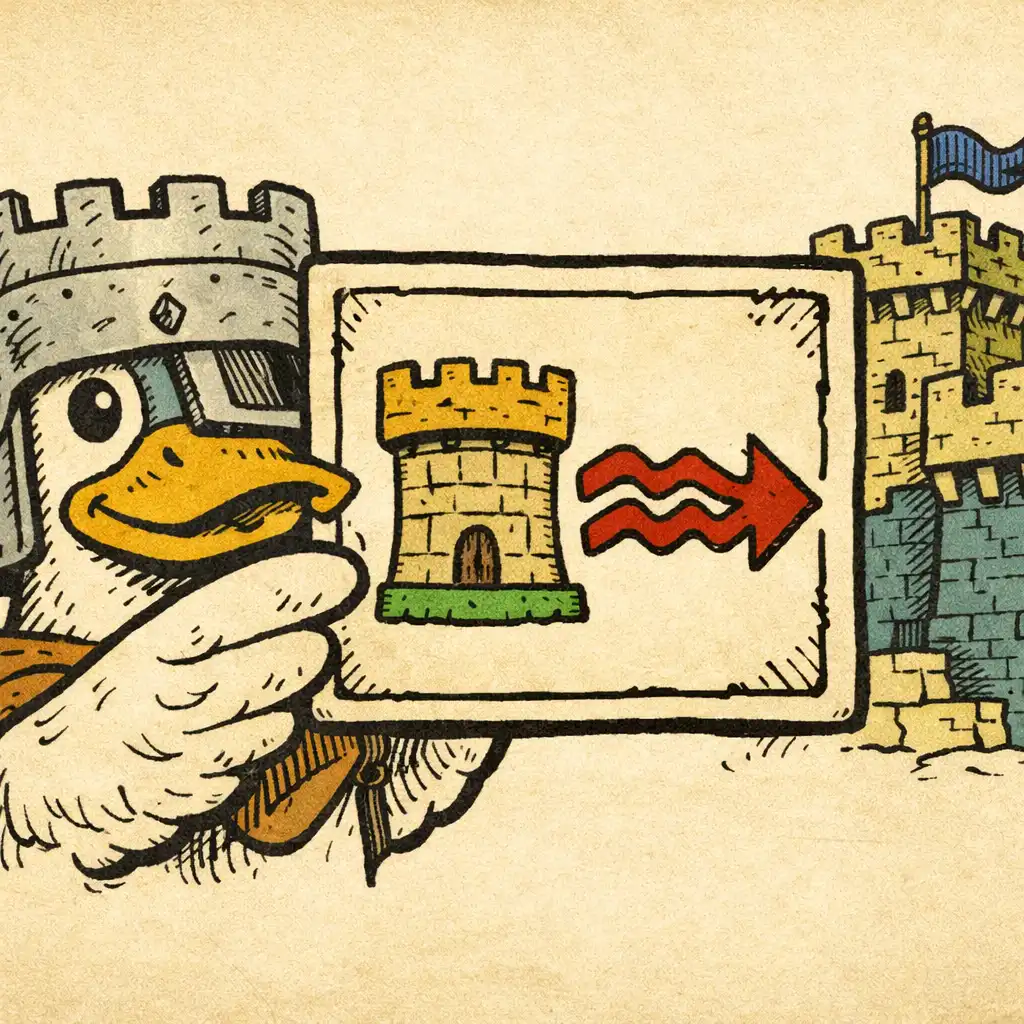
Hand-drawn illustration of a duck commander holding a battle card in front of a castle battlement.
A battle card ready to be played during a run.

Card Categories at a Glance

Unit Cards

Summon Allies to the Field

Unit cards summon allied creatures or structures to the battlefield. They provide additional damage, tanking, or utility beyond your towers.

  • Units may have different roles: melee, ranged, support.
  • Placement timing is crucial to maximise their effectiveness.
  • Some units may synergise with specific tower types.

Spell Cards

Turn the Tide Instantly

Spell cards provide immediate effects such as damage, healing, or temporary buffs. They are often used to counter specific enemy waves or save a failing defence.

  • Spells may have area-of-effect or single-target effects.
  • Timing is critical; saving a spell for the right moment can turn the tide.
  • Some spells may have cooldowns or limited uses per battle.

Modifier Cards

Shape the Rules of Battle

Modifier cards alter the rules of the battle or your towers' behaviour. They can provide passive bonuses, change enemy behaviour, or unlock new strategies.

  • Modifiers may be permanent for the run or temporary for a battle.
  • They can enable powerful synergies when combined with other cards.
  • Choosing the right modifier is key to a successful roguelike run.

How Battle Cards Work in a Run

  1. Acquiring Cards

    During a run, you'll have opportunities to add new cards to your deck. These may come from rewards after battles, shops, or special events. Card rewards often present a choice between three options, and you can sometimes skip a card to keep your deck lean. Understanding card rarity and power level helps in decision-making.

  2. Upgrading Cards

    Cards can often be upgraded to improve their effects. Upgrades may be offered at specific points or require resources. They might increase damage, reduce cost, or add new effects. Prioritise upgrading cards that fit your core strategy, and avoid spreading upgrades too thin across many cards.

  3. Playing Cards in Battle

    During a battle, you draw cards from your deck and play them using available resources. Managing your hand and resources is essential for victory. You may have a hand size limit, forcing you to plan ahead. Some cards can be played instantly, while others require targeting. Discarding or cycling cards may be part of the strategy.

Card Synergies and Combos

Understanding Synergy

Synergy occurs when two or more cards work together to produce a greater effect than the sum of their parts. Identifying and building around synergies is key to high-level play. Synergies can be based on card types, elements, or mechanics. A good deck has a clear synergy theme rather than a random collection of powerful cards, and synergies can be offensive, defensive, or utility-focused.

Theme matters more than individual power. A deck built around one coherent idea will consistently outperform a pile of strong but unrelated cards.

Building Your Battle Card Deck

  1. Step 1: Define Your Strategy

    Decide on a core strategy before adding cards. Are you focusing on tower damage, unit swarms, or spell control? Your deck should support that strategy. A clear strategy helps you evaluate card choices quickly, and you should avoid mixing too many strategies, which dilutes your deck. Consider the enemy types you'll face in the run.

  2. Step 2: Balance Card Types

    A good deck has a mix of unit, spell, and modifier cards. Too many of one type can leave you vulnerable to certain situations. Units provide sustained presence; spells offer burst; modifiers shape the long game. Aim for a ratio that suits your strategy, such as 50% units, 30% spells, 20% modifiers, and adjust the ratio based on your playstyle and the run's challenges.

  3. Step 3: Prioritise Synergy Over Power

    A card that fits your synergy is often better than a standalone powerful card. Synergy cards multiply each other's effectiveness. Look for cards that trigger or enhance your core combo. Sometimes a lower-rarity card with synergy is better than a high-rarity card without. Keep your deck lean to draw your key cards more often.

  4. Step 4: Adapt During the Run

    Roguelike runs are unpredictable. Be ready to adjust your deck based on the cards offered and the enemies you encounter. Don't lock into a strategy too early if the game offers better alternatives. Sometimes taking a card that counters a specific enemy wave is wise, and removing weak cards can improve your deck's consistency.

Using Cards During Enemy Waves

Timing Your Plays

The timing of card plays can be as important as the cards themselves. Save burst spells for large enemy groups or elite enemies, and deploy units early to build up your defence. Observe enemy wave composition to anticipate threats, use control spells to delay enemies while your towers deal damage, and don't waste powerful cards on weak enemies if you can clear them with towers alone.

Critical timing: Holding a key spell for the right moment can mean the difference between holding the line and losing your castle.

Resource Management

Cards likely cost resources such as mana or energy. Managing these resources is crucial; running out at a critical moment can lead to defeat. Plan your resource expenditure over the wave, and keep a reserve for emergency situations. Some cards may generate resources or reduce costs, which can smooth out your curve.

Resource tip: Treat your resource pool like a second health bar. Never spend everything unless the play is decisive.

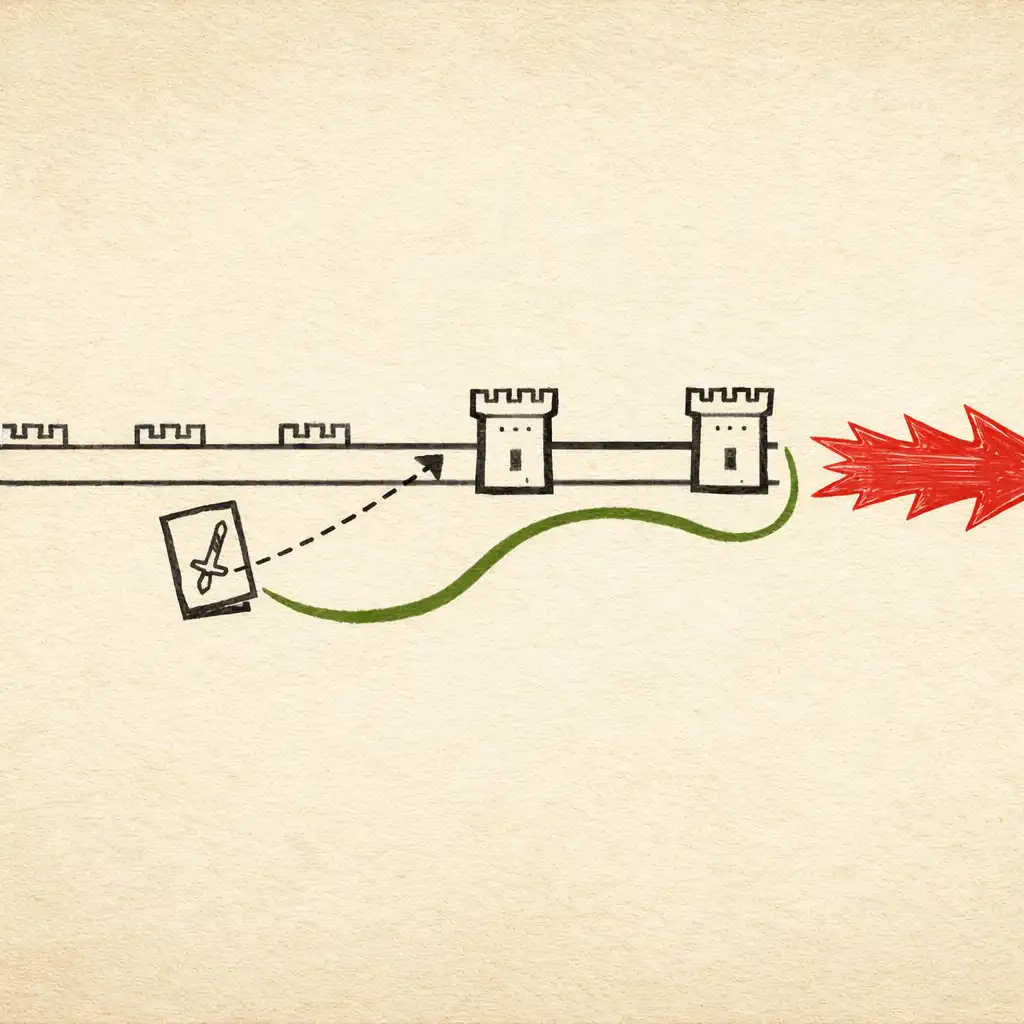
Tactical diagram showing a castle wall, tower icons, a warning-red enemy wave arrow, and a moss route line with a card effect indicator.
A simple wave-timing diagram showing when card effects can support your towers.

Advanced Card Tactics

  • Deck Thinning

    Removing weak or unnecessary cards from your deck increases the chance of drawing your key cards. This is a common advanced tactic in roguelike deck-builders. Look for opportunities to remove cards at shops or events. A lean deck cycles faster, allowing you to play your best cards more often. Be careful not to remove too many cards, leaving you without options.

  • Card Draw and Cycling

    Cards that draw more cards or allow you to discard and redraw can greatly improve consistency. They help you find the right answer for each situation. Card draw is valuable in almost any deck. Cycling cards can also trigger discard synergies if present. Balance draw cards with your resource generation.

  • Scaling for Late Game

    Some cards or modifiers grow stronger over the course of a battle or run. Building around scaling can help you overcome difficult late-game waves. Look for cards that increase damage or effects each time they're played. Scaling synergises well with card draw and cheap cards. Be mindful of the run's length; scaling may not pay off in short runs.

Common Mistakes to Avoid

  • Overloading on High-Cost Cards

    Filling your deck with expensive, powerful cards can leave you unable to play anything in the early game. Balance your curve with cheaper cards. A good deck has a mix of low, medium, and high-cost cards. Early game survival often depends on cheap units or spells, and high-cost cards are only useful if you can survive to play them.

  • Ignoring Synergy

    Picking cards solely based on individual power often leads to a disjointed deck. Always consider how a card fits your existing strategy. A synergistic deck outperforms a pile of strong cards. Evaluate cards in the context of your current deck, not in isolation. Sometimes passing on a powerful card is the right choice.

  • Neglecting Resource Management

    Running out of resources at a critical moment can cost you the battle. Plan your resource usage and include cards that generate or conserve resources. Keep an eye on your resource pool during battles. Avoid spending all resources on one big play unless it's decisive. Resource-generating cards can smooth out your curve.

Battle Cards and Castle Defence

Protecting Your Castle

Your castle is the ultimate objective. Cards can provide direct defence, such as healing the castle, summoning guards, or creating barriers. Some cards may repair or shield your castle. Units can be positioned to block enemy paths to the castle, and spells can clear enemies that breach your tower line.

Integrating Cards with Towers

Cards should complement your tower placement. For example, a spell that slows enemies can give your towers more time to deal damage. Consider how card effects interact with tower abilities. Use cards to cover weaknesses in your tower setup, and coordinate card plays with tower upgrades for maximum effect.

Conclusion and Next Steps

Battle cards are a deep and rewarding system in Duck Lords: Tower Defense TD. By understanding card types, building synergistic decks, and playing tactically, you can overcome even the toughest enemy waves. Experiment with different strategies to find what works for you, learn from each run and adapt your deck, and use the official Google Play listing to start playing and apply these tips.