Unit Cards
Deploy defenders onto the battlefield. Unit cards often form the backbone of a run and benefit from positioning and upgrades.
Duck Lords: Tower Defense TD is a tower defence game that blends roguelike deck-building with tactical card play. Players defend a castle by positioning units and playing battle cards against waves of enemies, with each run offering new choices and challenges.
Play on Google Play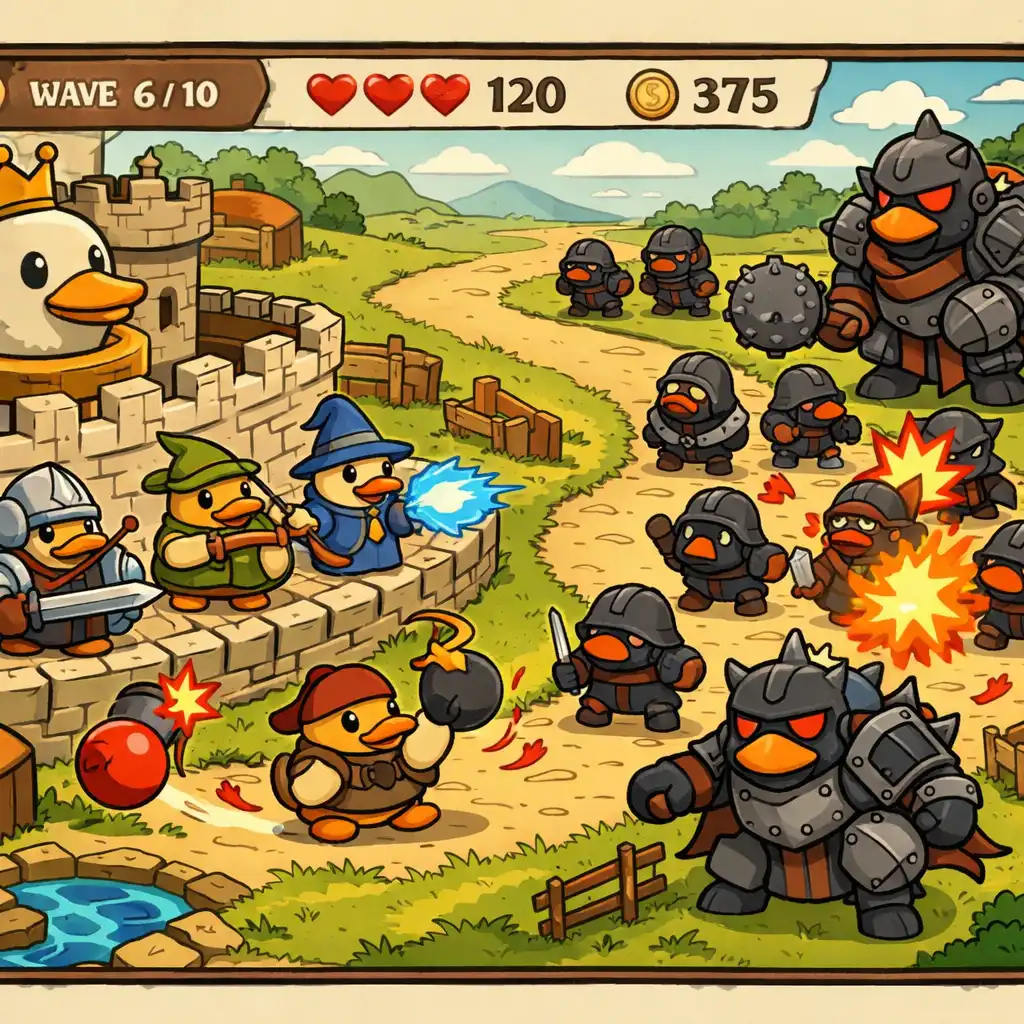
This review is based on verified gameplay mechanics and hands-on experience. We focus on how the game's systems work together, and we clearly label our subjective opinions as editorial judgments. No invented statistics or unverified details appear here, and all play and download links lead only to the official Google Play listing.
Each run begins with a basic castle defence setup. As enemy waves approach, you play battle cards to deploy units, cast effects, and adapt your strategy. Between waves, you choose new cards or upgrades, gradually building a deck that defines your run. Enemy waves increase in difficulty and variety, and the goal is to survive as long as possible and complete the run.
At key moments, you must choose between different cards or upgrades. These decisions shape your defence strategy and create tension between immediate survival and long-term synergy. Choices may involve adding new cards, upgrading existing ones, or gaining resources. Synergy between cards is a central strategic layer, and poor decisions can leave you vulnerable to later waves.
Your castle is the core objective. You position defensive units to intercept enemy waves before they reach it. Positioning matters because units have different ranges, attack patterns, and roles. Units may be placed on predefined spots or freely within a grid, and choke points and pathing influence optimal placement. Some units may specialise in area damage, single-target damage, or support.
Enemy waves come in increasing intensity and variety. Learning wave patterns and anticipating threats is key to survival. Some waves may include tougher enemies or special abilities. Anticipating wave composition helps you prepare the right cards and units.
Battle cards are the primary tactical tool. They can deploy units, cast spells, or trigger effects. Managing your hand and timing card plays is crucial to surviving waves. Cards may have costs or cooldowns, and drawing and playing cards creates a dynamic tactical layer. Some cards may be upgrades or one-time effects.
Synergies occur when cards work together to produce stronger effects. Building a deck around a synergy can dramatically improve your defence, but requires careful planning and luck in card choices. A synergistic deck can handle harder waves more efficiently, while over-reliance on one synergy can be risky if key cards are not drawn.
Deploy defenders onto the battlefield. Unit cards often form the backbone of a run and benefit from positioning and upgrades.
Create immediate effects such as damage, healing, or battlefield control. Timing these cards can swing a difficult wave.
Improve existing units or cards for the rest of the run. Upgrades reward planning and can make a synergy much stronger.
Units are the physical defenders placed on the battlefield. They have different roles, such as damage dealing, tanking, or support. Choosing the right mix of units is essential for a balanced defence. Units may have different attack ranges and speeds, and some may be better against certain enemy types. Upgrading units can improve their effectiveness.
Lords are special characters or commanders that provide unique abilities or passive bonuses. They may influence your deck or unit performance, adding another layer of strategic choice. Lords may have distinct playstyles, and choosing a Lord can shape your entire run strategy. Lords may be unlockable or selectable at the start of a run.
| Unit Role | Typical Function | Strategic Use |
|---|---|---|
| Melee | Blocks enemies at close range | Hold choke points and protect ranged units |
| Ranged | Deals damage from a distance | Place behind defensive lines for safe damage output |
| Support | Heals, buffs, or debuffs | Improve the effectiveness of the whole defence |
Each run offers different card choices, enemy compositions, and possibly map layouts. This variety keeps the game fresh and encourages experimentation with different strategies. Randomised elements prevent runs from feeling identical, and players must adapt to what they are offered. Replayability is a core strength of the roguelike structure.
Between runs, you may unlock new cards, units, or Lords, or gain permanent upgrades. This meta-progression provides a sense of long-term growth even when a run fails. Meta-progression softens the difficulty curve, and unlocks can open new strategic possibilities. The balance between run-based and permanent progression is key to the game's appeal.
The game requires balancing immediate tactical needs with long-term deck-building goals. Every card play and unit placement has consequences, and skilled players can find powerful synergies. Positioning, card timing, and deck composition all matter, and adapting to random elements is a key skill. The roguelike structure rewards planning and flexibility.
While luck plays a role in card draws and wave composition, skilled players can consistently perform better through good decision-making. Understanding synergies and enemy patterns reduces reliance on luck, and resource management and timing are crucial. High-level play likely involves optimising every choice.
During a run, you improve your deck and units by choosing new cards and upgrades. This creates a sense of growth and power increase as you face tougher waves. Card choices often involve trade-offs between immediate power and synergy, and upgrading units can make them more effective. The difficulty curve is designed to match your growing power.
Between runs, you may unlock new content or permanent bonuses. This meta-progression provides long-term goals and encourages repeated play. Unlocks may include new cards, units, or Lords, and permanent upgrades can make future runs easier or open new strategies. The balance between run-based and meta-progression affects the game's longevity.
The game likely features a charming, hand-drawn or stylised art style consistent with its duck-themed castle defence premise. The visuals support the tactical gameplay by making units and enemies readable. The duck theme adds personality and humour, and clear visual distinction between friendly and enemy units is important for gameplay. The art style may appeal to a broad audience.
Good visual design in tower defence games ensures that players can quickly assess the battlefield. The game's interface and effects should support tactical clarity. Unit silhouettes and animations help convey roles, and enemy wave indicators should be clear. The overall aesthetic should not distract from strategy.
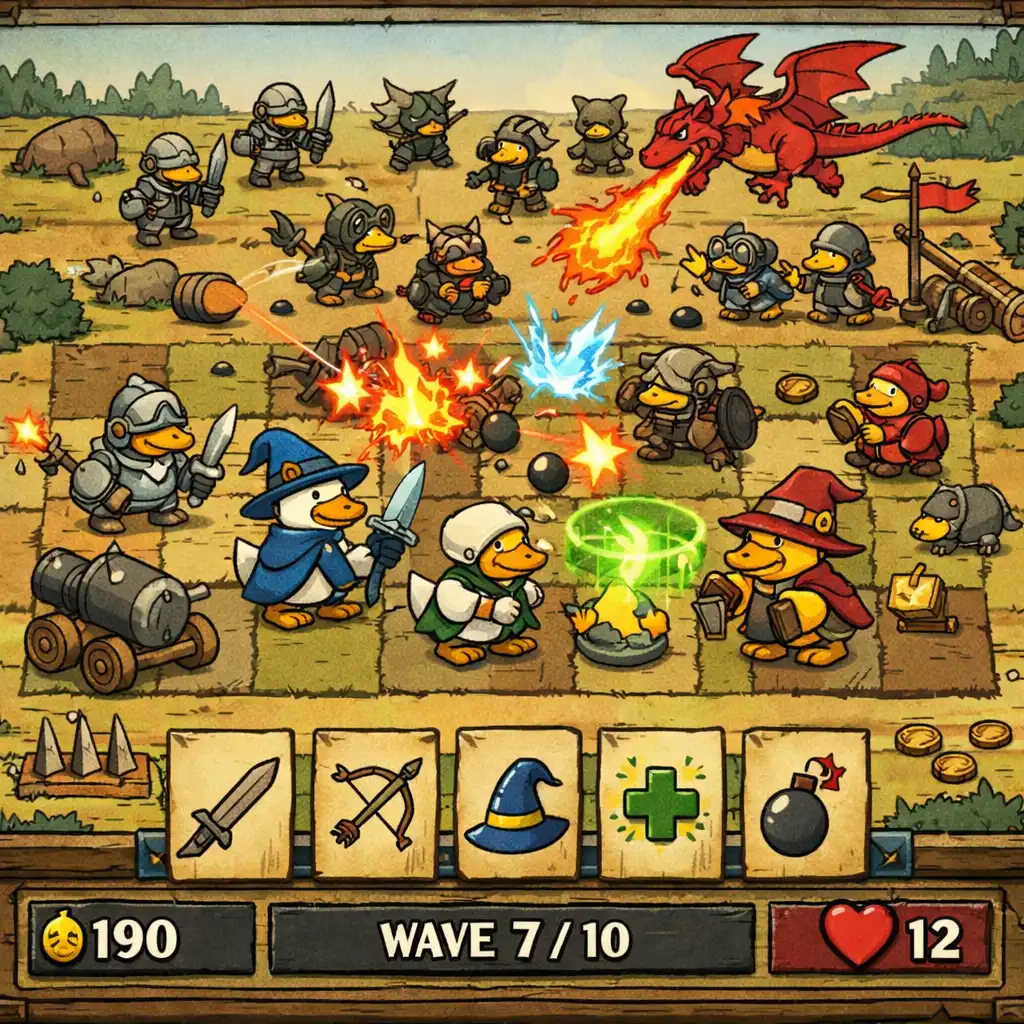
The game is designed for mobile play, so readability on small screens is crucial. Clear unit silhouettes and wave indicators matter even more when the battlefield is reduced to a phone-sized view.
The game likely starts with simple mechanics and gradually introduces more complexity. The tower defence genre is generally accessible, and the card system adds depth without overwhelming new players. Tutorial or early levels may teach basic positioning and card play, and the duck theme may make the game feel approachable. Clear UI and tooltips can ease the learning process.
While easy to start, mastering the game requires understanding synergies, wave patterns, and optimal deck building. The learning curve is likely gentle at first but steepens for high-level play. Roguelike elements add unpredictability that requires adaptation, and experienced players can find deep strategic layers. The game may not hold your hand after the early stages.
The roguelike structure ensures that no two runs are exactly alike. Random card choices, enemy waves, and possibly map variations keep the experience fresh. Different card combinations lead to different strategies, and unlockable content adds new options over time. The challenge of beating harder difficulties can extend playtime.
Meta-progression and the pursuit of mastery provide long-term goals. Players who enjoy optimising strategies will find plenty to sink their teeth into. Unlocking all content may take many hours, and high-score chasing or daily challenges, if present, can add replay value. The game's depth rewards repeated play.
The combination of tower defence, deck-building, and roguelike elements creates a compelling and unique gameplay experience. The duck theme adds charm, and the strategic depth is substantial. In our editorial judgment, the game's strongest qualities are its genre blend, replayability, accessibility, and visual personality.
As with many roguelike games, the reliance on random elements can sometimes lead to frustrating runs. The mobile platform may also impose limitations on complexity or control precision. In our editorial judgment, the most likely drawbacks are occasional unfair randomness, potential grinding for meta-progression, and a theme that may not appeal to everyone.
Duck Lords: Tower Defense TD is a promising blend of tower defence, deck-building, and roguelike mechanics. Its charming theme and strategic depth make it worth trying for fans of the genre, despite some potential frustrations from randomness. The game offers a unique and engaging experience, is accessible to newcomers but deep enough for veterans, and provides high replayability. We recommend it with the caveat that random elements may not appeal to everyone.